Someone I loved once gave me
a box full of darkness.
It took me years to understand
that this, too, was a gift.
(Poem by Mary Oliver)
It’s easy to be thankful for the good things. Health, a smile, a family, a lover, friends tucked in so many corners of the world.
What about the terrible things? The things that made me cry, made me spend all night tossing, turning, pacing. Broken hearts, shame, fury that knew no bounds.
This year, I’m thankful for that. For my temper, my pettiness, my fierce inability to just be still. For disappointments, for mistakes, for falling down more times than I can count.
What’s bringing this strange appreciation on? Well, today I went pawing through my old journals. I’ve kept one, more or less faithfully, since senior year of high school. One, more or less, for every year. I avoid looking at my journals.
While I keep writing in them and carried all of them from Vermont to Colorado like a jealous, possessive, paranoid lover, I avoid reading them. I’m ashamed of them. Ashamed of the things I’ve written, the thoughts I had, the mistakes, the whining, the way life occasionally blindsided me in my naiveté. I hate reading them.
Except, today I flipped through them looking for a poem I half-remembered copying down among the pages. As the sheets turned, worn out spines cracking, I read sentences, paragraphs, entire pages.
I surprised myself with my own tenderness, looking back not with disgust but with patience. I found poetic lines, honest struggle, bravery, and above all the sincere desire to do good. To try with all my might, even if my trying was misplaced.
All this newfound sweetness is probably due to being in the midst of a grand adventure, maturing so much in just a year, and overflowing with love. But, for what it’s worth, today at least, I wouldn’t change anything. Not a single line in any of those black moleskine books.
Happy Thanksgiving, y’all.
I’m several weeks late with my birthday list, I know. I know. I’ll post again soon. Promise. xo
Three weeks ago, I accepted a job in Boulder, Colorado. The day before I started the long, long drive, I sat in a small town restaurant with my good friend and ski buddy, Doug.
His hands were wrapped around a cup of coffee, steaming in the cool room. Mine were doing their best not to clutch at the cold ginger ale.
We talked about lots of things, as friends and ski buddies do. Hopes and fears. You know, the usual. And we talked, too, about what our lives would be like without skiing.
We’d have so much more money, we commiserated. We wouldn’t be tied to the mountains, incapable of moving to any number of lovely, interesting places in the world where mountains and winter simply don’t exist. Our lives would, perhaps, be a little more simple if we weren’t head over heels in love with skiing. Half an hour of whining and we both came to the same conclusion.
Neither of us would change a god damn thing.
Skiing sings a siren’s song. It echoes and rattles around inside of us, and the longer we wait, the more the sound drives us mad. Skiing, its freedom, fear, and power composes melodies that ensnare the part of us that seeks novelty, challenge, and adrenaline in equal measure. Skiing demands us.
Last night in Boulder, far away from my Green Mountains, I made the annual pilgrimage to the Warren Miller ski movie premier. As images of powerful skiers like Ingrid Backstrom, Chris Davenport, and XFGIUNBFslashing big mountains and endless powder stashes, I felt the tumble of pre-season emotion, jitters and excitement, roll over me like rooster tails of snow.
Am I good enough to ride these mountains?
Can I keep up?
Seriously, am I ever going move to Chamonix?
And, over it all, like a touch of static blurring the edges of a favorite song on the radio: I am so happy it’s finally winter.
In the words of Johnny Mo in this year’s film, No Turning Back: It’s like falling in love with someone who promises to leave after four months.
Yeah, it is like that. But they’ll come crawling back next year.
The first time you say it, say it like a whisper. Try the words out on your tongue, under your breath, audible only to you.
I’m moving.
Say it again, this time with feeling. Let the smile crawl into your voice. Let the syllables round out in your mouth like a cat waking up. The words, they belong to you. They are your words now. Own them.
I’m moving.
A few days later, say them again. Repeat them to friends, family, landladies. Quantify them. Say them so often that you start to feel the enormity of them.
I’m moving to Colorado.
Colorado!
I was, then I wasn’t, now I am. Moving. To Colorado.
Between now and Sunday, I pack up my east coast life in my tiny Ford Fiesta. I wedge a battered ski bag between boxes in the back of my car (there’s only room for one pair. My “race skis,” practically antiques, won’t make the journey with me.) I pile clothes into bags and boxes. I play tetris with them, fitting them into my trunk, letting them overflow into the backseat.
Sometimes, I write poems. Not with any regularity. But every once in a while, I write poems.
They are written over the span of years, words added and subtracted like glaciers forming and calving. Sometimes, I go looking for their half-developed stanzas, sifting through documents and post-it notes. Other times, like tonight, I find one purely by accident while on the hunt for some other distant .doc.
My best guess is that this poem was started in 2010 or 2011. I finished it last night.
The Descent
We sprinted up mountains with hands pressed together like hips or
lips whistling for water. We went down running, rushing, every
step toe-stubbing, gasping for air.
I really do forget the
frantic laugh of his kiss at the top and the weight
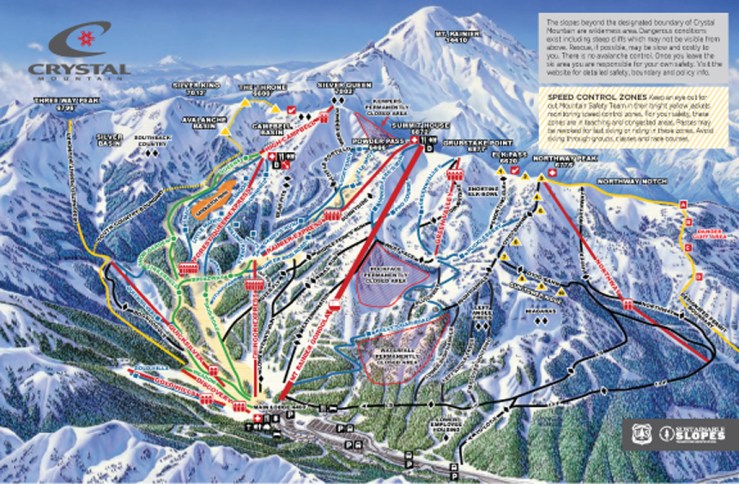
This story occurred before the invention of camera phones, so I do not have appropriately dated imagery for the occasion. Here. Have a map instead.
Once upon a time (as all important stories begin), a little girl stood on a ridge line high above the tree line. She was 13 years old, and she was terrified.
“I’m not going,” she said. “We should turn around,” she said.
“No way,” her eldest brother said.
“Just a little farther,” her father said.
The little girl tried every excuse in the book, anything except admitting that something about walking along the ridgeline made her feel dizzy and sick. On either side, the drop seemed impossibly sheer, the rocks impossibly dark and sinister against the beautiful, powdery white. (She realizes almost ten years later that she is afraid of heights.)
Her brother took her skis. Her father prodded her along, offering words of encouragement and promises and threats. She knows that they don’t know anything about avalanche danger, but she knows, too, that arguing this fact is useless and doesn’t want to think of it anyway.
To her, it feels like an hour before her little troop catches up with another group. First, two men carrying two pairs of wide powder skis and one sit-ski. They take turns carrying the heavier equipment. The men smile, laugh, and wave the little girl ahead. “We’ll catch up,” they say, as if this meeting was planned
The lump in the girl’s throat sinks into a pit of dread in her stomach. Shame starts coloring her face before they even get to the third man. Moving along the path in front of his friends was Jim. His legs stopped at his knees, but he navigated along the narrow path with the ease of familiarity. He looks up and says hello cheerfully.
The girl considers flinging herself off the edge of the next cliff in humiliation.
Unlike so many locals, Jim and his friends welcomed the three outsiders into their group. Their smiles were large and genuine and without hesitation they invited the little group to join them.
She stood there feeling like an idiot (because, obviously, the little girl was me). She spent the entire hike psyching herself out and making her brother and father miserable, and yet here was someone with a physical impediment who had made the very same climb with a smile on his face. She was thoroughly ashamed.
She stuck close to the locals, in complete awe. When they dropped over the cornice, She followed without question and landed her first 10 footer completely by accident. (“Oh, it’s just a little drop,” her father said. Her father is a liar.)
That run is seared into her memory as the best run she’s ever taken. Almost a foot of fresh snow had fallen overnight and even my straight east-coast skis floated through the fluff like a dream. She followed the white clouds kicked up by the locals, delirious with the feeling of flying through powder snow.
Several in-bounds runs later, maybe after a bathroom break, she was walking to catch up with her family. A snowboarder with long, straggly blond hair held out a hand to stop her. a”Excuse me,” he said, “Were you the girl on Silver King?”
It took her a confused moment to answer. He wasn’t one of the locals we skied with, and she hadn’t seen anyone else on that part of the mountain. “Um. Yes?” she mumbled, already trying to move on.
“That’s awesome,” he said.
She felt a jumbled mix of shame and pride, a strange combination of sensations that is as seared into her memory as the heavenly run itself.
I’ve tried to write this post so many times. I’ve started, and stopped, and put it away. Sometimes I saved the draft. Sometimes I deleted it immediately. While I’ve told this story countless times, but for some reason it’s difficult for me to place it in written words. Part of this is because I still feel that uncomfortable mix of emotions. I hardly deserved the praise. But I was a 13 year old from Massachusetts, a long ways away from big mountains and powder days in the double digits.
That day marked a turning point for me, as if that day I became The Girl on Silver King. Three years later when I hiked Tuckerman Ravine for the first time, I insisted on carrying all of my own gear, although that same brother offered to help. I also made sure that I carried my share of water, wine and food. I learned my lesson.
It’s crazy to think that I’m already double the age I was on that peak. I still think of myself (with pride) as The Girl on Silver King.
Silver King is adjacent to Crystal Mountain. I do not recommend or condone out-of-bounds skiing for those without avalanche training. Mountains are big. Always tread lightly around things that are bigger than you.
In all sports, you must learn to trust your body. In skiing, you place your trust in the power of your legs, the pressure of your shins against the front of the boot, the angle of your hips. You trust your body to control your speed and propel you forward, to absorb impact and launch you into flight.
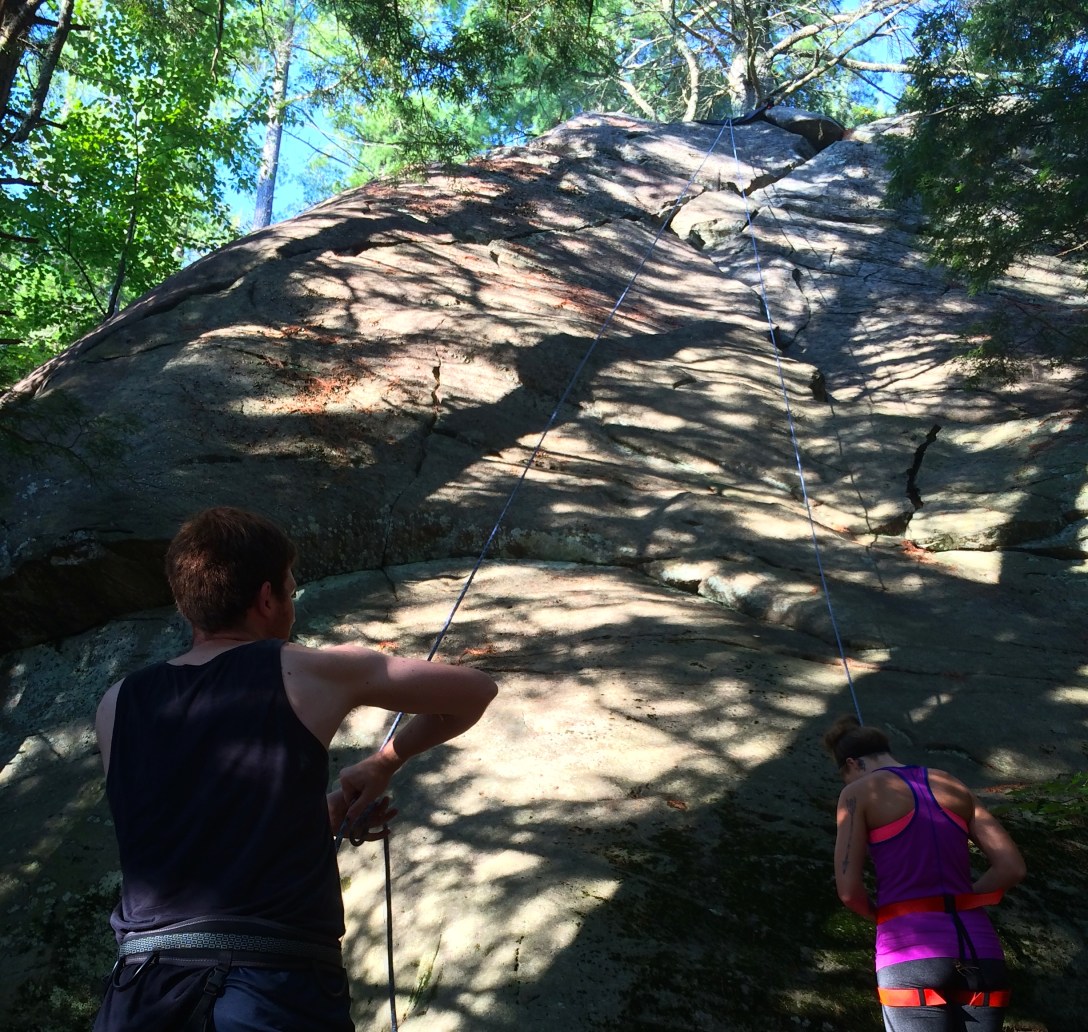
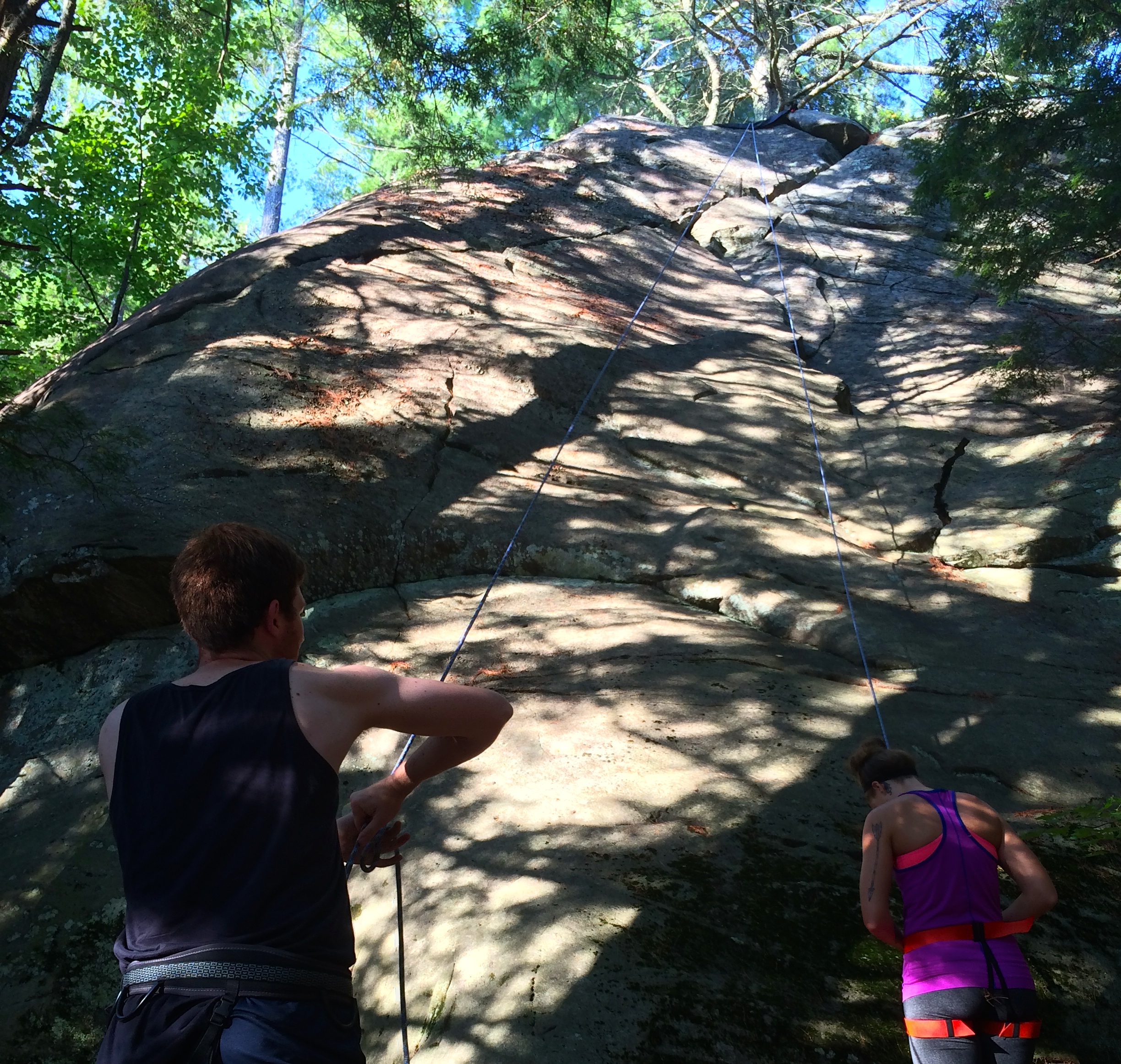
But I think… In one sport, it’s less about trust and more about faith. Trust has a logical basis. Faith is at least a little illogical. Faith requires a willful denial of logic. Which sport is this? Climbing.
In climbing, you must have faith that your hand will not slide and that the strength in your fingers is enough to hold steady. You must have faith that your reach will expand that extra inch, that your jump will bring you just a little bit farther than seems possible.
More than anything, you must have faith in your feet. Faith in the ability of your feet to find a hold where none exists, to turn rock crystals into a perch that will bear your weight just long enough to follow your momentum to the next hand hold, the next foothold-that-isn’t-there, anything to move forward.
Can you tell that I just went climbing after a hiatus of years?
It’s the end of August and autumn overtakes full branches of trees. Driving to the dump, it’s hard not to marvel at the bright orange standing stark against the green. The colors are beautiful. I don’t remember ever seeing them so sudden and crisp.
This is southern Vermont. Three hours north, in the Kingdom, the trees started turning in July. It was cold when I was there last – much too cold to go swimming (although I waded in anyway and spent the rest of the day chilled to the marrow).
The summer tumbled by, not in a flurry of activity, but bore by the steady pace of Must Do.
I think I’ve been domesticated. I’m not sure how I feel about this.
Although I do love my new cutting board and ukulele.
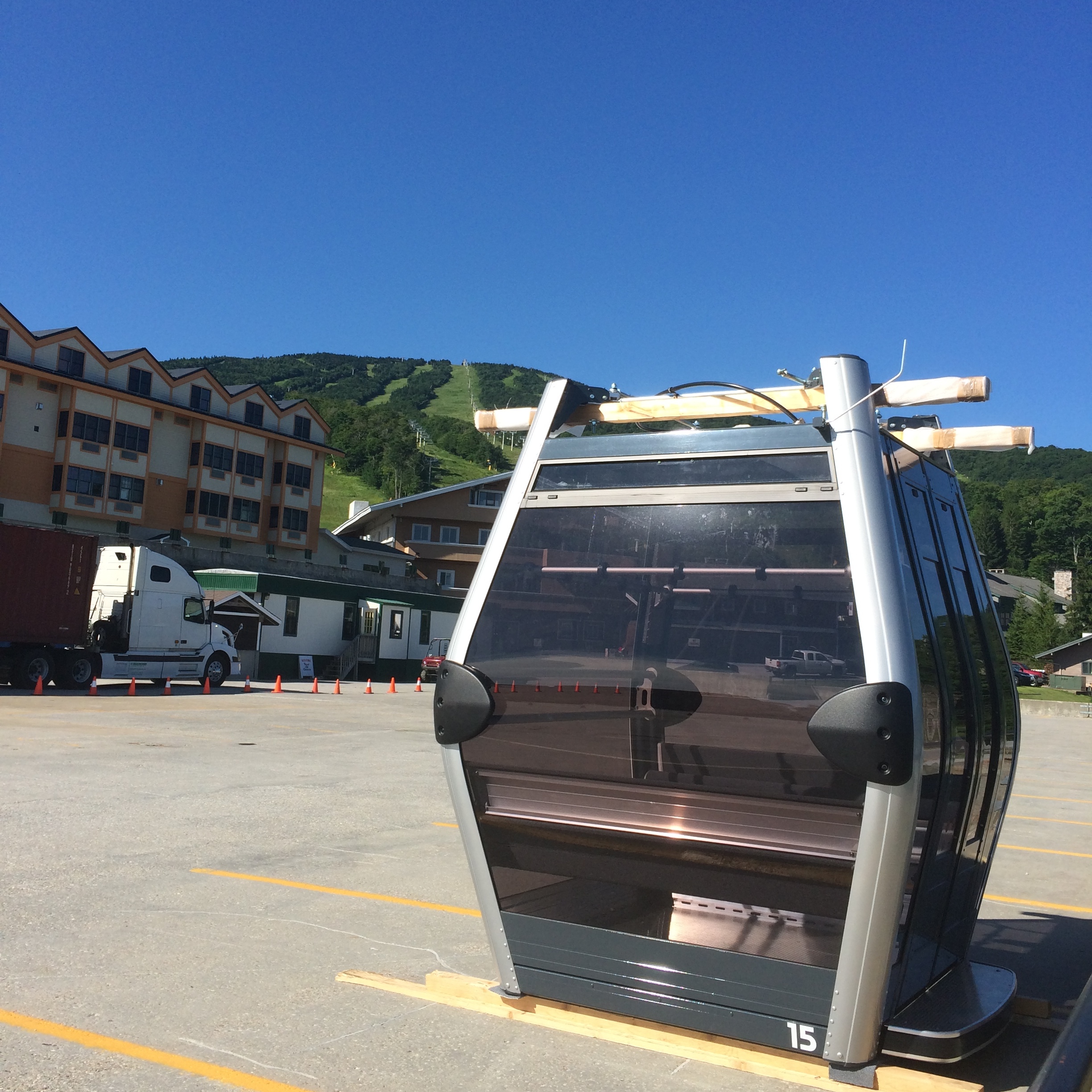
I don’t know about your ski resort, but it’s definitely been a busy summer at mine. Here I was worried that I wouldn’t have anything to do. I couldn’t be more wrong. It’s a different kind of busy than it is in the ski season, but it definitely is busy.
Welcome to that special time of year when the weather is perfect between 9am and 5pm and torrential downpours complete with lightning from 5pm to 9am.
It’s a good time. Really.
I would like to share a quote I found from Skiing Magazine. They’re running a series on snow sport industry dream jobs, and of course I clicked on their interview of freelance writer Chris Solomon. Anyone who wears that much orange with a bottle of what appears to be whiskey is A-Okay By Me.
This is the bit I’m so keen on sharing:
What do you enjoy the most about ski writing?
I’ve learned over the years that it’s more about the experience, and not necessarily the perfect powder days. It’s not all about getting that iconic face shot, or that perfect gourmet meal at a four-star restaurant. People don’t always want to read about great days—those days aren’t what make us. The challenging, weird, get-your-ass-handed-to-you trips are the ones that are fun to read and write about. Standard resort stories are boring; they lack a narrative. Skiing is all about finding cool, new places and meeting cool, new people. After a while it’s not really about the snow, or the skiing itself—at least not for me.
Un-italicized emphasis is, of course, mine.
I love the weird days. Like when I went camping for the first time: when the chaperoning English teacher drove over my suitcase of snacks (destroying my bag, a jar of Nutella, and a box of granola bars), I then burned my hand moving a burning log, got some sort of rash from swampy cattail water, and didn’t sleep more than 3 hours a night because I had never slept in a tent before and it’s scary, okay?
Or that time on my college orientation trip when I decided that it was a good idea to make a pita bread sandwich with tuna, pepperoni, summer sausage, goldfish and honey. In defense of my creation, it was certainly not the worst thing I’ve ever eaten.
I don’t really have much of a point. Just wanted to share this interview, because it’s pretty neat, and the series, which is also pretty neat. I’ve heard rumors that SKIING is trying to bring itself back to life and out from under the soulless awfulness that is SKI Magazine. I hope that happens.
Care to share a weird story from one of your adventures? Don’t be shy. I just publicly admitted to eating honey and tuna fish of my own free will. Nothing is as embarrassing as that.
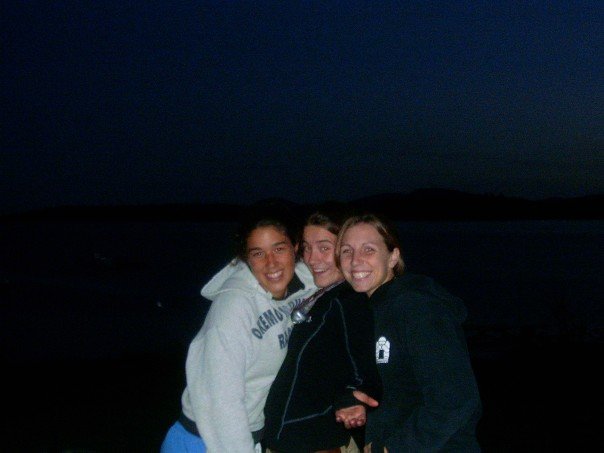
This photo was taken in 2006 around the time of the Tuna Incident. I’m in the middle.
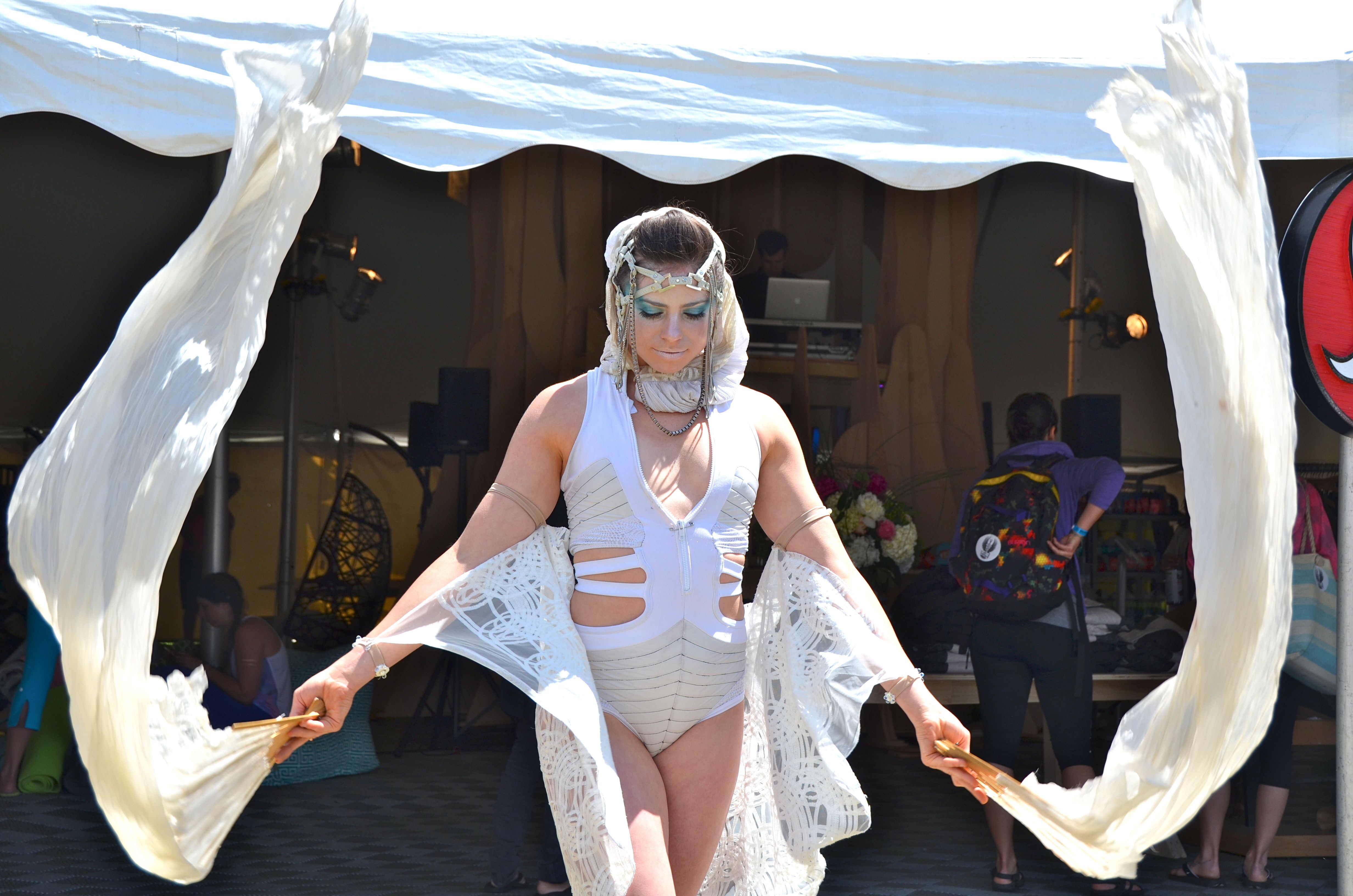
This is Megan, a performer from Quixotic. She and her team were absolutely amazing. Awe-inspiring & delighting. I’m also really, really proud of this photo. http://quixoticfusion.com/
I’m coming down from the high of Wanderlust-Stratton. While I’ve worked every day since the 16th, supporting the festival was hardly labor. As my first festival experience, I spent the entire four-day period wrapped in wonder, exploring. I’m sad to say I didn’t suck the marrow from the festival, but I’m also not surprised. I didn’t know how much I would be needed in the office, so didn’t sign up for many classes or lectures. I popped in on a few, but found that my body was so out of yoga shape that I was nearly crippled by day four, conveniently when I decided I wanted to do a Chi Running workshop.
Suffice to say I did not make it to the workshop.
But, even without the Chi Running coaching, I still feel kicked out of a weird little funk. See, I was not built for sitting still or windowless rooms. To remind myself of this, I want to write down my Wanderesolutions.
Move every day.
Explore, with wonder.
Write where someone else can see.
Appreciate the wealth in simplicity.
I totally posed this photo.
The first two points need no explanation. They come from Wanderlust directly. To move one’s body and explore everything, inside and out.
Om shanti shanti shanti.
The second two merit, I think, some introduction. To write where someone else can see is to write bravely. Which means, mostly, writing here. But also, I’d like to write for publication. I’ve said this for years. Now that I’ve claimed my quiet places in both the woods and our house, it’s time to make time for that. To do it, perhaps with shyness, but to do it anyway.
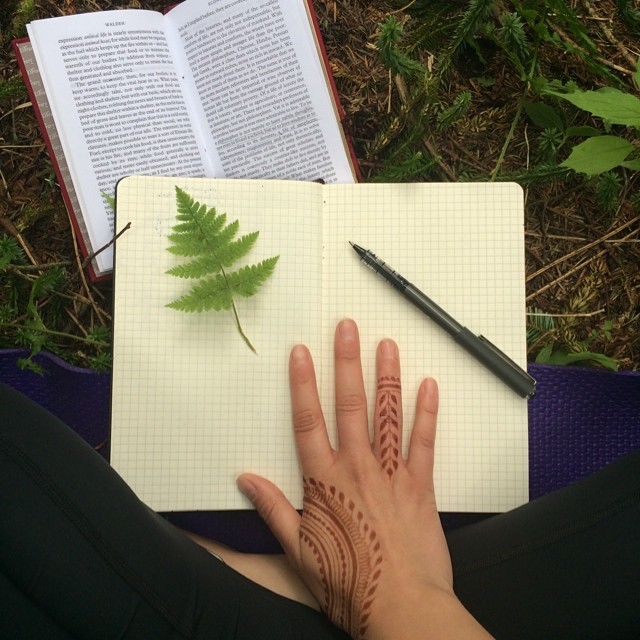
As to simplicity. In middle school, I bought a copy of “Walden.” I started reading it, as evidenced by a few underlined passages. Past the pencil lines, I see a self-conscious un-understanding; knowing these things were personally significant while being uncomfortably aware that the words were not really significant yet. Like an premonition. It makes way more sense now.
In short, between now and next year, I have an awful lot of Wanderlusting to do. Let’s go.



 Sidecountry Living